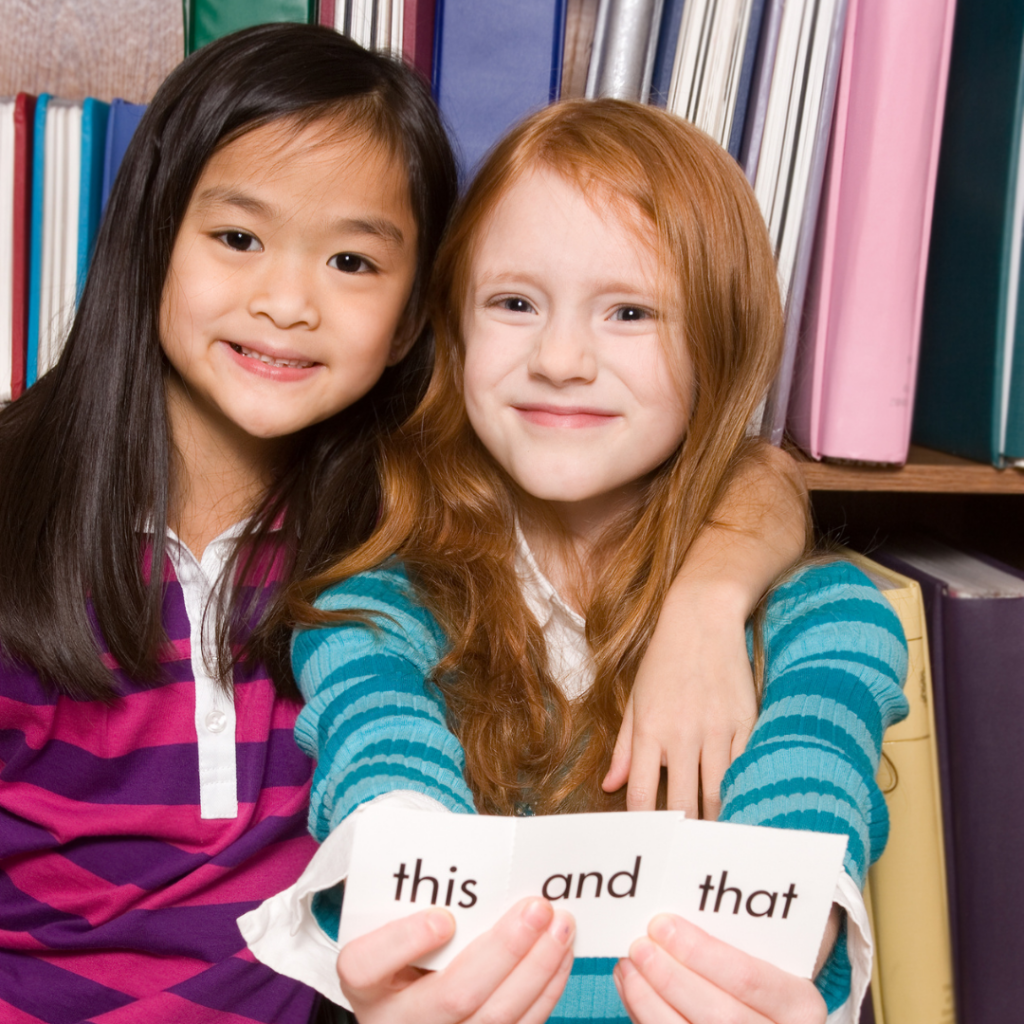
There is something special about opening a book with a child.
A few words on a page can introduce a new idea, spark a question, create an imaginary world, or begin a conversation that continues long after the book is closed.
For children learning English, reading can be especially valuable. A story gives individual words something vocabulary lists cannot always provide: context.
Instead of simply memorizing a word and its definition, children see how words work together. They begin noticing sentence patterns, discovering how characters express emotions, following ideas from beginning to end, and learning how language is used to communicate meaning.
And reading doesn’t have to be complicated.
Whether your child is three years old and exploring picture books, eight years old and beginning to read independently, or thirteen years old and developing opinions about what they read, books can help strengthen English one story at a time.
This October, as families settle into the school year and spend a little more time indoors, it’s a wonderful opportunity to make reading part of everyday family life.
📚 Reading Builds More Than Vocabulary
Vocabulary is one of the most obvious benefits of reading, but it is only the beginning.
When children encounter words inside stories, they also learn how those words connect to other ideas.
Imagine a child encounters the word enormous in a story.
The sentence might say:
“The enormous elephant could barely squeeze through the small doorway.”
Even if the child has never seen the word enormous before, the illustration, sentence, and story can help them understand that it means very big.
Now the child hasn’t simply memorized a definition. They have experienced the word in context.
Over time, repeated exposure to words through stories can help children recognize vocabulary more easily and become more comfortable using new words when they speak and write.
💬 Stories Show Children How Sentences Work
Children learn language partly by noticing patterns.
Reading regularly exposes them to complete sentences, questions, descriptions, conversations, and different ways of expressing ideas.
They begin seeing patterns such as:
The dog runs.
The dog ran.
The dog will run.
Or:
She is happy.
She was happy.
She will be happy.
Instead of grammar existing only as a rule in a lesson, children begin seeing how language works naturally inside meaningful sentences.
The more language children encounter, the more familiar those patterns can become.
🧠 Reading Strengthens Comprehension and Thinking
Understanding English is about much more than recognizing individual words.
Children also need to understand ideas.
While reading, children practice following events, remembering details, making predictions, identifying problems, understanding characters, and connecting information.
Parents can encourage these skills with simple questions:
“What do you think will happen next?”
“Why do you think the character did that?”
“What was the problem in the story?”
“How was the problem solved?”
“What would you have done?”
There isn’t always one perfect answer.
The goal is to encourage children to think about what they read and explain their ideas.
That turns reading from a quiet activity into an opportunity for communication.
🌟 Stories Encourage Imagination
A good story invites children to imagine possibilities beyond their everyday experiences.
What would it be like to travel through space?
What would happen if animals could talk?
What would you do if you discovered a secret door?
Imagination encourages children to create ideas—and creating ideas gives them something meaningful to communicate.
After reading a story, try asking:
“What would happen if the story continued?”
“Can you create a different ending?”
“What new character would you add?”
These questions can lead naturally into speaking, drawing, storytelling, and writing.
Children aren’t simply practicing English anymore.
They’re using English to create.
🗣️ Reading Can Lead to Better Speaking
Reading and speaking don’t have to be separate activities.
A book can become the beginning of a conversation.
Children can describe a picture, predict what happens next, explain their favorite character, retell part of the story, or share whether they agree with a character’s decision.
Younger learners might answer with only a few words.
Older learners might explain an entire opinion.
Both are valuable.
The goal isn’t to turn every book into a test. Sometimes the best question is simply:
“What did you think about the story?”
Then give your child time to answer.
✏️ Reading Helps Children Become Better Writers
Children need examples before they can create their own writing.
Books provide those examples naturally.
Through reading, children encounter story beginnings, descriptions, dialogue, sequencing words, paragraphs, punctuation, and different writing styles.
After reading, writing practice can remain simple.
A younger child might draw a picture and label it.
An elementary-age learner might write three sentences about a favorite character.
An older child might create an alternate ending, write a book review, or continue the story with a new chapter.
Reading gives children ideas.
Writing gives them an opportunity to make those ideas their own.
📖 Reading Ideas by Age
Children’s reading needs change as they grow. The goal is not to rush children into more difficult books, but to find material that is interesting and appropriate for their current language and reading ability.
Ages 3–5: Explore, Listen & Talk
At this age, reading should feel playful.
Choose picture books with colorful illustrations, repetition, rhyming words, animals, family themes, numbers, colors, everyday routines, and familiar experiences.
Parents can:
📖 Point to pictures and name objects.
❓ Ask, “What do you see?”
🎨 Ask children to find colors or shapes.
🐶 Practice animal names and sounds.
🗣️ Let children repeat favorite words or phrases.
🔮 Pause and ask what they think will happen next.
Don’t worry if your child cannot read the words independently yet.
Listening, looking, talking, and interacting with books are all important parts of early literacy.
Ages 6–10: Build Understanding & Independence
As children become more independent readers, encourage them to interact with what they read.
Try short chapter books, illustrated stories, nonfiction books, comics, educational magazines, or books connected to their interests.
After reading, ask questions such as:
“Who was your favorite character?”
“What new word did you discover?”
“What was the most interesting part?”
“What do you think happens next?”
Children can also keep a simple word notebook.
Instead of writing long vocabulary lists, choose just a few interesting words from each reading session.
For each word, children can write:
New word → Meaning → Sentence → Picture or synonym
This makes vocabulary more meaningful and easier to connect to the story.
Ages 11–15: Read, Question & Express Opinions
Older learners can begin using reading to develop deeper communication skills.
Encourage them to explore novels, biographies, nonfiction, news written for young readers, science, history, mysteries, fantasy, or subjects connected to their personal interests.
The important question becomes less:
“Did you understand every word?”
and more:
“What did you think about what you read?”
Ask your child to explain an opinion.
Do they agree with the author?
Would they have made the same decision as the character?
What surprised them?
What would they change?
Older learners can also write reviews, summarize chapters, debate ideas, research unfamiliar topics, or create their own stories inspired by what they read.
This helps move English beyond comprehension toward independent expression.
🌎 What If I Don’t Speak English Fluently?
This is an important question for many parents around the world.
You do not need to speak perfect English to support your child’s English learning.
Your role isn’t to become your child’s English teacher.
Your role is to encourage learning.
You can listen to an English audiobook together while following the printed book.
You can ask your child to teach you three new English words from the story.
You can discuss the story in your family’s home language.
You can look at illustrations together and ask questions.
You can use bilingual books when available.
You can celebrate when your child finishes a book or understands something new.
Most importantly, show interest.
When a parent says, “Tell me about what you’re reading,” the child has an opportunity to become the communicator.
That can be incredibly powerful.
🏡 Create a Simple Family Reading Routine
Reading doesn’t need to become another complicated task on the family schedule.
Start small.
Even 10–15 minutes of reading can become a meaningful family routine.
Try reading:
📚 Before bedtime
🍎 After school
☀️ During weekend mornings
🚗 While waiting for an appointment
🛋️ During quiet family time
Consistency matters more than creating the perfect reading schedule.
And remember: not every child will love the same books.
One child may love fantasy.
Another may love animals.
Another may prefer science, sports, mysteries, graphic novels, or funny stories.
The best book is often the one your child is excited to open.
🍂 An October Family Reading Challenge
This month, try a simple challenge:
Choose one story. Read it. Talk about it. Learn from it. Create something from it.
After reading, ask your child to choose one activity:
✨ Find five interesting words.
🎨 Draw a favorite scene.
🗣️ Retell the story in their own words.
✏️ Write a different ending.
❓ Create three questions about the story.
🎭 Act out a favorite scene.
💭 Invent a new character.
📖 Recommend the book to someone else.
One book can become vocabulary practice, speaking practice, comprehension practice, writing practice, and family conversation—all without turning reading into another worksheet.
💙 From Words to Communication
At The Brenly, we believe learning English should go beyond memorizing vocabulary and grammar.
Children need opportunities to use language.
Reading gives them those opportunities.
A new word becomes a sentence.
A sentence becomes an idea.
An idea becomes a conversation.
And eventually, children begin using English to tell their own stories, express their opinions, ask questions, and communicate with the world around them.
That is when language becomes more than something children study.
It becomes something they can use.
Final Thoughts
You don’t need a huge home library or hours of extra study time to help your child become a stronger reader and communicator.
Start with one book.
Read together.
Ask a question.
Discover a new word.
Laugh at a funny character.
Imagine a different ending.
And most importantly, make reading something your child associates with curiosity, connection, and discovery.
Because sometimes a child’s journey toward becoming a confident communicator begins with something as simple as turning the first page.
🌍 We’d Love to Hear From You!
What is your child reading right now?
📚 Share your child’s age and a favorite book or type of story in the comments.
Your recommendation might help another parent discover their child’s next great read!
Happy reading from all of us at The Brenly! 💙